
The Love How You Eat Journal
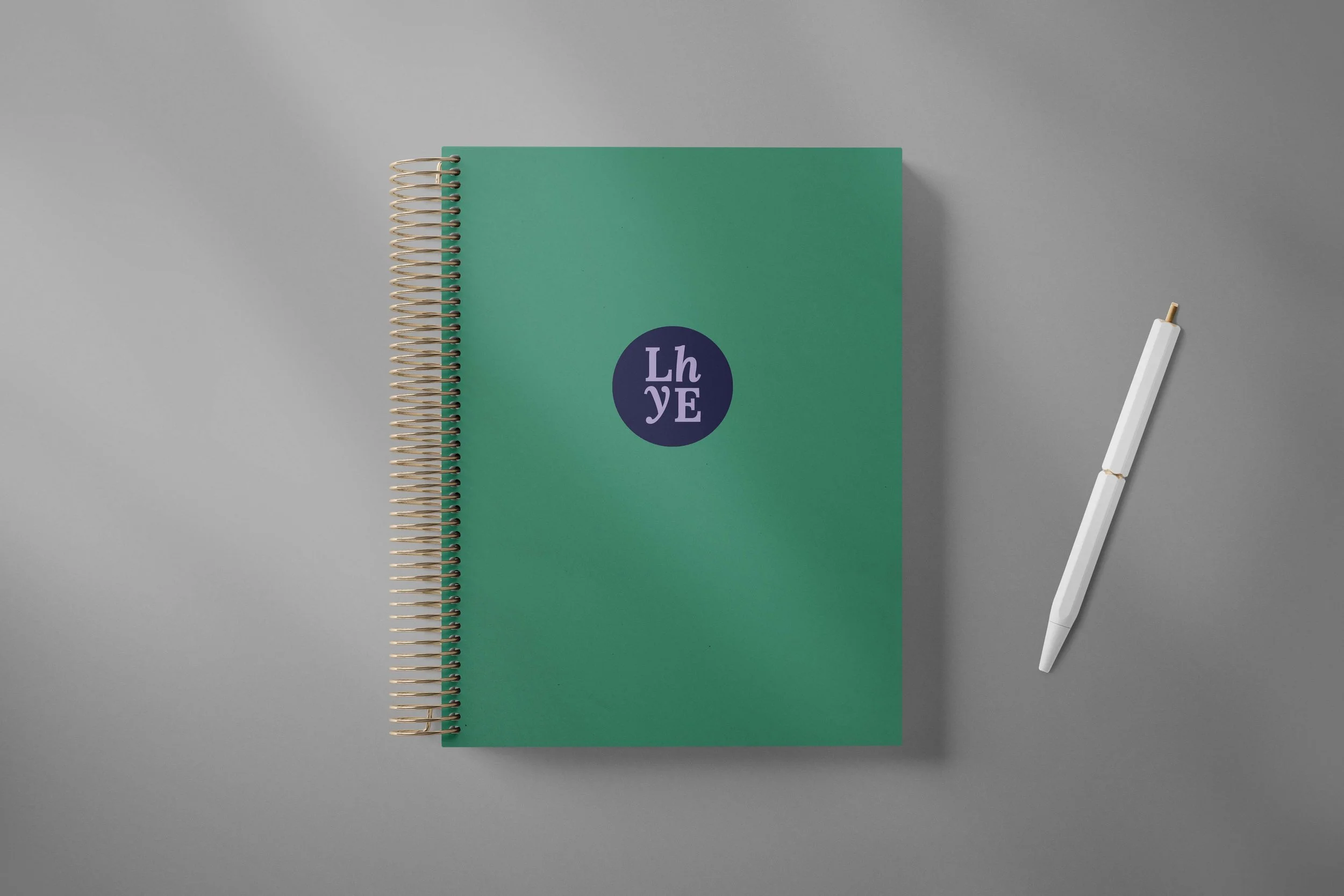
If you’re tired of dieting and emotional eating, and you want to feel better in your body, this is the journal for you.
Do you remember your first Weight Watchers or Slimming World food log?
Or the intricate colour-coded weekly meal plans made on frustrated Sunday evenings or hopeful Monday mornings?
And do you remember the disappointment you’d feel from saying screw it again and being inconsistent? Feeling confused and hopeless about what to do next?
This journal changes all of that.
Because the issue was never just about the diet or food plan (though restrictive eating will never help you).
The issue is WHY you don’t want to follow the plan at certain times.
The solution then becomes about helping you to stop quitting on yourself in those moments and make that new response habitual and natural.
When you stop using food and alcohol to comfort and numb how you feel, you’re able to respect your body’s natural cues (hunger and fullness), resulting in better eating habits and weight loss you can sustain.
The Love How You Eat journal teaches you how to eat in integrity with yourself, even when you want to say screw it.
It teaches you to be consistent with a way of eating that feels good to you and which aligns with your values, giving you boundless energy and confidence, and helping you honour the weight loss results you want.
And it helps you learn how to incorporate highly pleasurable and palatable things in a way that doesn’t lead to over-consumption so you never feel deprived.
The Love How You Eat Journal includes:
introduction about why this journal is so effective
explanation of the Love How You Eat principles
comprehensive user-guide and supportive tools
worksheets to help you set a goal
and achieve itweekly habit tracker
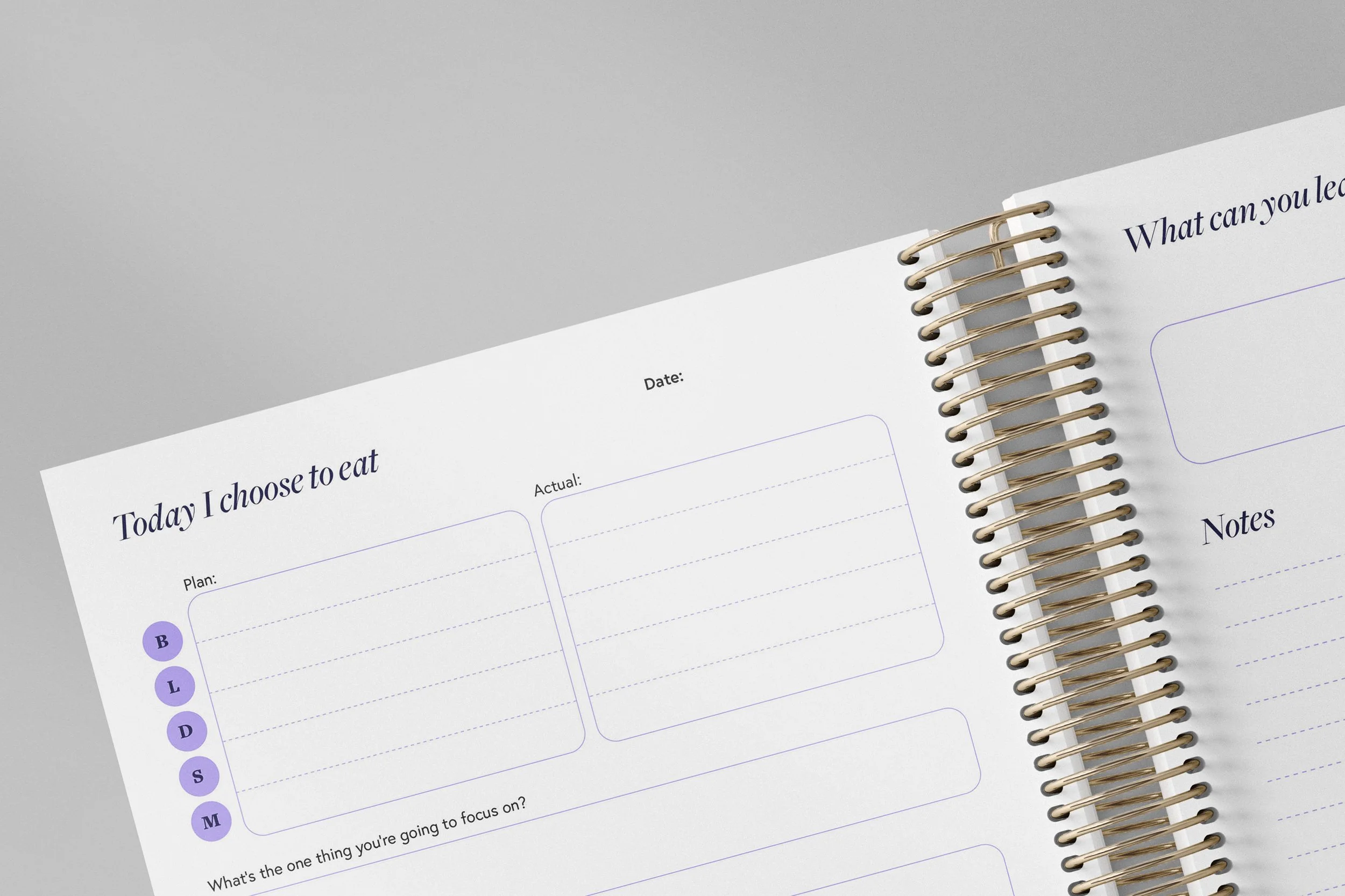
90 days of a daily food and drinks planner, with space for notes and learnings
Q&A troubleshooting
helpful journal prompts
Why this works
The Love How You Eat Journal will help you create lasting eating and drinking habit change by helping you be accountable to your goals.
The journal works by anticipating your primal brain’s desire and priorities (like taking the path of least resistance, getting dopamine, avoiding threat like negative emotions, doing what it knows best) and teaching you how to act from your highest self, regardless of what your urges and primal brain are telling you to do.
It will help you:
Learn how to consistently eat and drink in line with your goals.
Learn how to follow through on your food and drinks plan despite challenging feelings or circumstances.
Stop quitting on yourself when things feel hard or you don’t do them perfectly.
Build your meals to minimise hunger and cravings.
Let go of all-or-nothing diet mentality and make space for the food you love so that you never feel deprived.
Stop mindlessly snacking.
Choose self-kindness over harsh self-criticism.
Learn how to manage your emotions without numbing them with food and alcohol.
Learn how to truly enjoy food and alcohol without negative consequences or sacrificing your goals.
Create a delicious eating and drinking protocol which will help you achieve sustainable weight loss and food freedom.
Troubleshoot common challenges so that you can keep moving forwards.
The by-product of all of these things will be weight loss you can sustain and lasting eating and drinking habit change.
FAQs
-
What makes this journal different to calorie counting?
If you’re an emotional eater, calorie tracking and retrospective food tracking (like a Weight Watchers or Slimming World food log) isn’t effective. It doesn’t teach you to manage your urges to emotionally eat because you’ve already said f*ck-it and that’ll you be “good” again tomorrow.
Calorie counting doesn’t help you acknowledge how you’re feeling when you want food that you’re not hungry for, or retrain your brain to expect a different solution than numbing with food or alcohol.
This journal gives you the tools and the daily practise of urge management so that you’re not eating for the sake of eating and thinking “I’ve got 100 calories left so I may as well use them”.
It helps you tune out of your head and into your body, asking the simple question of whether you’re genuinely hungry or not, and learning the skill of stopping at enough. Not because you’ve hit your calorie limit, but because you feel satisfied by what you’ve had.With time and practise, your brain embeds this new behaviour.
You start to trust your body and yourself, and recognise that’s all you need to feel your best.
And you learn to ride out urges and know why it’s in your best interest to do that.
The more you ride them out, the fewer urges you’ll have over time. And you’ll get to experience how good it feels to be free of over-desire and constant mind chatter about food.
-
The Love How You Eat Journal helps you create an eating and drinking protocol which forms the basis of your daily planning. The protocol is based on the sustainable weight loss work I do with 1:1 clients and I give you suggestions to create your own protocol which suits your life and preferences.
The focus is on eating minimally processed food and building your plate with intention, eating for hunger and stopping at enough, AND making space for things like sugar and alcohol in a deliberate way, so that you always feel empowered about your choices.
It stops you saying f*ck-it by working with your brain and emotions, and helps you stay conscious to the goals you have every day.
If you stopped saying f*ck-it, don’t you think you’d lose weight?!
As you become someone who doesn’t mindlessly snack or eat to solve an uncomfortable emotion, you cut out the food that is stopping you from weighing your natural weight.
And as you tune into your personal hunger and fullness cues, without over-riding them, you cut out the food your body doesn’t want or need.
As you become someone who follows through with what you say you’re going to do, food becomes less fraught and emotional, and starts to become more joyful.
As that negative emotion lifts, you won’t turn to food in the same way and you’ll be more consistent with a healthy, nutritious way of eating.
The journal also helps you stop quitting on yourself and your goals. The key is to stop stopping!
We stop the diets (which “work” in theory) because they are unsustainable and make us feel rubbish, and they don’t address emotional eating, pleasurable eating (like birthday cake or weekend croissants), and how to incorporate alcohol!
The journal holds you accountable to the weight loss goals you have and shows you a sustainable way of achieving them which means you won’t keep quitting on yourself.
The focus is on eating minimally processed food and building your plate with intention, eating for hunger and stopping at enough, AND making space for things like sugar and alcohol in a deliberate way, so that you always feel empowered about your choices. It stops you saying f*ck-it, and helps you stay conscious to the goals you have every day.
As you become someone who doesn’t mindlessly snack or eat to solve an uncomfortable emotion, you cut out the food that is stopping you from weighing your natural weight. And as you tune into your personal hunger and fullness cues, without over-riding them, you cut out the food your body doesn’t want or need.
As you become someone who follows through with what you say you’re going to do, food becomes less fraught and emotional, and starts to become more joyful. As that negative emotion lifts, you won’t turn to food in the same way and you’ll be more consistent with a healthy, nutritious way of eating.
The journal also helps you stop quitting on yourself and your goals. The key is to stop stopping! We stop the diets (which “work” in theory) because they are unsustainable and make us feel rubbish, and they don’t address emotional eating, pleasurable eating (like birthday cake or weekend croissants) and how to incorporate alcohol!
The journal holds you accountable to the weight loss goals you have and shows you a sustainable way of achieving them which means you won’t keep quitting on yourself.
-
How will this help me retrain my eating and drinking habits?
If you can commit to writing your plan every day, learning from anything that doesn’t go perfectly, and using the podcast for extra support, you will be able to retrain your eating and drinking habits.
This is EXACTLY how I created my weight loss. ✍🏻🎧
You’ll be able to identify your triggers and cravings and start to anticipate them ahead of time, making decisions about how you’re going to handle them when they inevitably happen.
It helps you take on the identity of someone who follows through on your word, which means will honour that identity over your primal brain’s desire for instant gratification and to repeat old habits.
You’ll start to create evidence of your new identity and see how good it makes you feel. That reward will feel greater and more important than the instant pleasure of a drink, biscuit or chocolate.
You’ll begin to release the burden of your old identity where you believed that you’re broken, greedy, inconsistent or a lost cause who just loves food too much.
The journal helps you to stay the course of habit change which takes time and practise, just like learning an instrument.
It’ll help you recommit every day to become the eater you want to be: someone who eats for hunger, stops at enough, and feels empowered about all their food choices.
You brain will learn this is how you do things and it’ll become natural over time.
Remember, all of your eating behaviours are learnt and therefore can be unlearnt.
-
If you can commit to writing your plan every day, learning from anything that doesn’t go perfectly, and using the podcast for extra support, you will be able to retrain your eating and drinking habits.
On a practical level, I recommend setting an alert in your phone’s calendar, or an alarm on your phone, to write the plan at a time that suits your diary. This could be with your first morning coffee for the day ahead or at night after the kids have gone to bed (for the next day).
You might also find it helpful to set these for other times at the weekend when your routine is different. There is more information packed into the journal on how to use it and troubleshooting over twenty common questions.
There is also a goal setting worksheet which helps you identify your compelling reasons for change.
It will remind you of the results you’re trying to create (like sustainable weight loss and not buffering your feelings with food and alcohol) which you’ll see every day you use the plan.
The daily plan itself helps you connect with what you really want and visualise the person you want to become through your actions today.
By taking that moment every day to tune back into your body and the goals you have, you’ll be surprised how effective it is in helping you make supportive food choices and changing the habits that are keeping you from feeling your best.